
Author: G. Vanden Bossche, DVM, PhD October 3rd, 2026
Are We Seeing the First Signs That the Metastable Phase Is Beginning to Break?
Why PJ.2.1, renewed lineage dynamics, a widening epistatic fitness landscape and the current epidemiological signal deserve closer attention
For several months, I’ve argued that the apparent evolutionary stability of SARS-CoV-2 (SC-2) should not be mistaken for true equilibrium. My hypothesis has been that sustained population-level immune pressure has driven the virus into a metastable evolutionary state: a state in which an increasingly diverse spectrum of viral variants explores different genetic solutions while opposing fitness effects keep the overall phenotype within apparently tolerable boundaries.
What we are seeing now makes me wonder whether that metastable phase may be beginning to destabilize.
I emphasize wonder, rather than conclude. Current clinical surveillance does not yet show the explosion in severe disease that would constitute the ultimate phenotypic signature of the transition I’ve predicted. But several recent evolutionary observations are precisely of the type I would expect to precede it.
The critical issue is no longer which mutation does what in isolation. It is which mutations have become possible because the genetic background on which they occur has changed.
Epistatic interactions can attenuate or amplify the phenotypic effect of immune-escape mutations and thereby progressively diversify the viral fitness landscape. A mutation that was previously inaccessible because its immune-evasive benefit came at an unacceptable cost to receptor binding, spike (S) stability or infectivity may become advantageous when it arises on a background that has accumulated sufficient compensatory fitness elsewhere.
This is the central point I developed in my recent Substack on epistasis: a viral population can appear phenotypically relatively stable while the underlying genetic degrees of freedom continue to increase [1]. Different lineages may occupy different local fitness optima; positive and negative fitness effects may compensate one another; and a mutation that is deleterious on one background can become neutral ‒ or advantageous ‒ on another.
Ryan Hisner’s recent PJ.2.1 threads provide an unusually clear illustration of this point. On July 21, he highlighted PJ.2.1 on the Neher/Roemer BA.2.86 phylogeny and drew attention to how far the branch sits from other currently circulating lineages. The importance of the picture is not simply branch length. It is the combination of a highly ramified post-BA.2.86 landscape with a saltational lineage occupying a conspicuously displaced position within that landscape. [2,4]
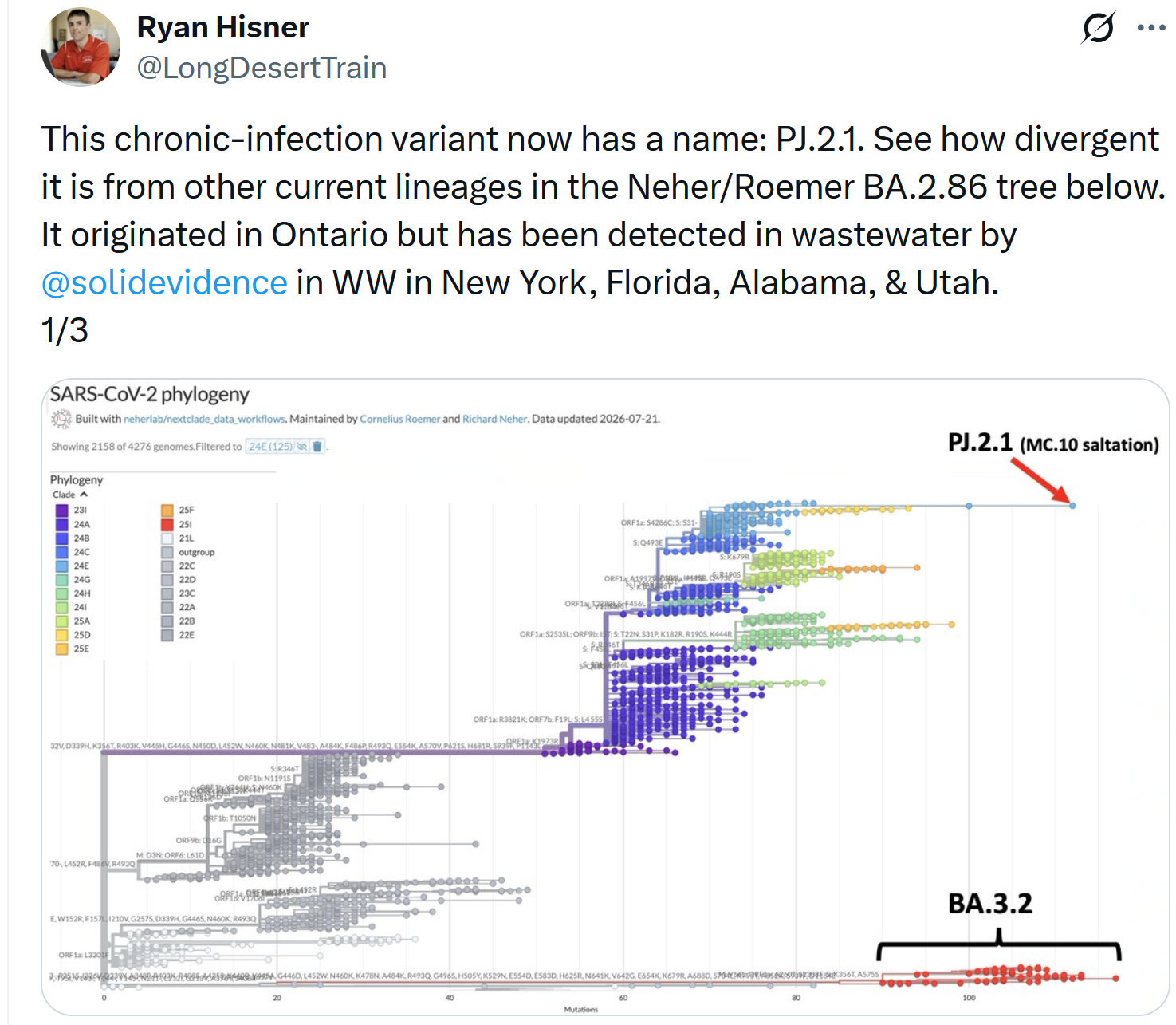
Figure 1A. Original Neher/Roemer BA.2.86 phylogeny highlighted by Ryan Hisner, 21 July 2026
Hisner subsequently reconstructed the PJ lineage using newly available New York sequences. The pattern prompted a striking observation: “The whole PJ tree is completely unlike what you typically see.”
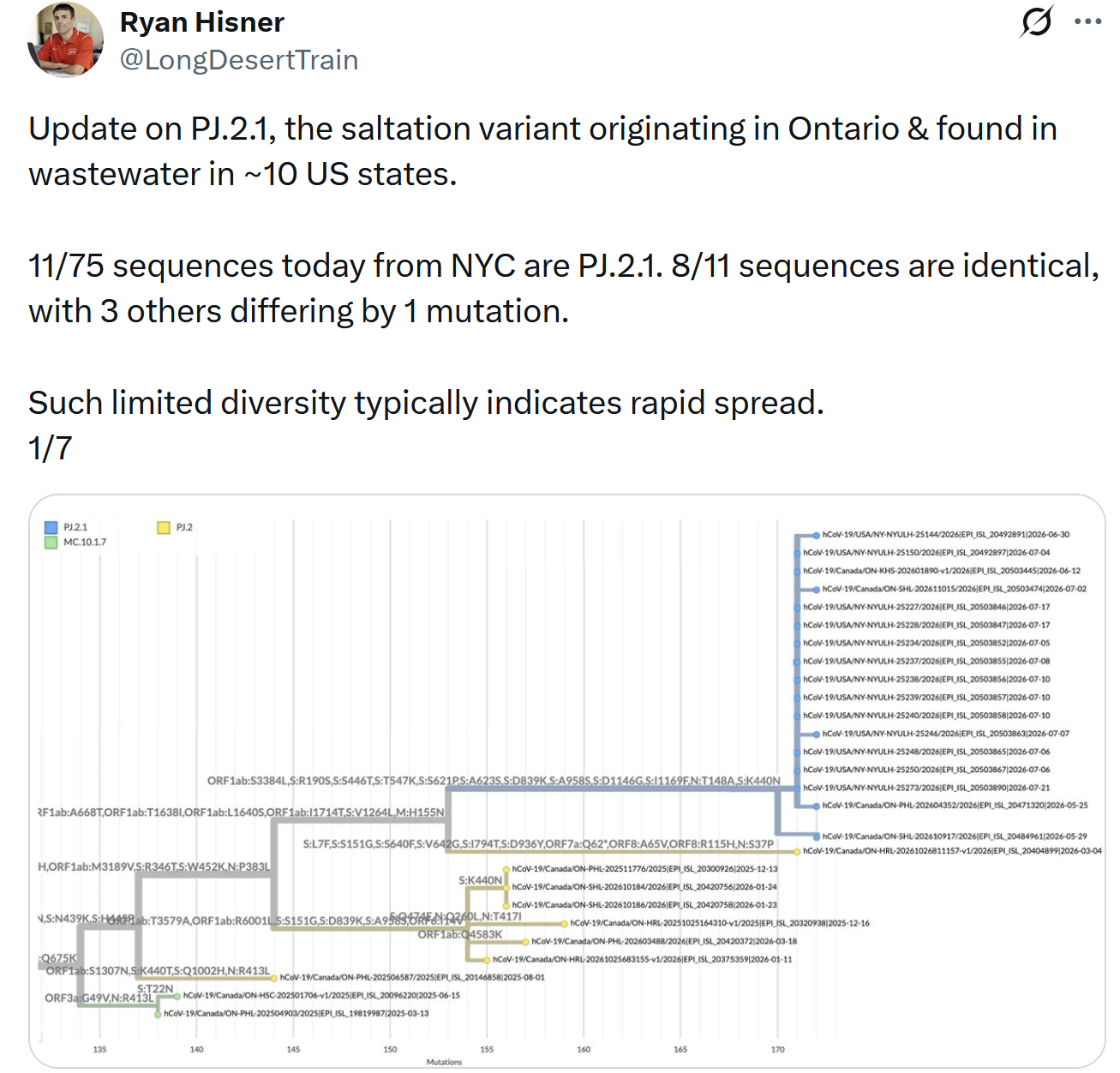
Figure 1B. Ryan Hisner’s updated PJ.2.1 phylogeny, 1 August 2026
He hypothesized that the unusual branching pattern could reflect repeated transmission of genetically diverse viruses emerging from a persistent infection. That specific origin remains a hypothesis but the topological observation itself is important: 11 of 75 newly reported New York City sequences were PJ.2.1 and 8 of those 11 were identical, with the remaining three differing by a single mutation. Hisner interpreted the limited diversity within that expanding cluster as consistent with rapid spread while emphasizing that the broader PJ tree itself was highly unusual. PJ does not resemble a simple sequence of population-level substitutions marching progressively along one branch. It looks like repeated exploration of divergent genetic states, followed by the apparent emergence of a branch with substantially better transmission than its predecessors. [3]
A highly branched lineage landscape does not necessarily indicate evolutionary indecision. It may instead represent extensive exploration of the fitness landscape before a genetic configuration arises that opens access to an entirely new phenotypic trajectory. [1–4]
PJ.2.1 provides a particularly interesting illustration of how such a transition could become possible. Recent experimental work indicates exceptionally high ACE2-binding capability while its present antibody (Ab) escape is by no means exceptional. In evolutionary terms, that excess receptor-binding capacity may constitute something like fitness capital: fitness that can subsequently be ‘spent’ on immune-evasive mutations that would have been too costly on another genetic background. [5]
This is why the recent appearance of independent PJ.2.1 descendants carrying S:A475V is conceptually more interesting than the fate of A475V itself. Whether that particular substitution ultimately matters is almost secondary. The observation illustrates how a highly fit genetic background can begin exploring Ab-escape solutions immediately after its emergence. A receptor-binding surplus can change which escape mutations are affordable. [6]
Intrinsic fitness surplus permits otherwise costly immune escape previously inaccessible sequence/phenotype space becomes accessible.
That is exactly the kind of mechanism by which a fitness landscape can suddenly open an evolutionary route that was previously inaccessible. In the language of my model, epistatic compensation may make a previously uncrossable fitness valley crossable. [1,5]
This is also why mutation-by-mutation surveillance may become increasingly difficult to interpret. When the phenotypic effect of mutation x depends on mutations a, b, c and d elsewhere in the genome, cataloguing individual substitutions risks missing the higher-order evolutionary structure.
The problem is no longer simply identifying the trees. The forest itself is changing shape.
If a genuine phase transition emerges from an increasingly complex network of epistatic interactions, its immediate precursor may look confusing rather than orderly: numerous lineages; numerous apparently contradictory fitness effects; saltational variants appearing from old genetic backgrounds; and mutations that mean one thing on one background and something entirely different on another.
It is tempting to look at every renewed increase in SC-2 circulation and call it another seasonal wave of an endemic respiratory virus! I do not think the present observations can be adequately explained that way. This does not mean that seasonality is irrelevant. Temperature, humidity, indoor behavior, school calendars and other environmental variables undoubtedly modulate transmission. Seasonality alone, however, does not explain the combination of epidemiological and viral evolutionary data now available.
First, endemicity should not be confused with seasonality or evolutionary equilibrium. In highly C-19-vaccinated countries, SC-2 currently circulates endemically while continuing to undergo profound adaptive change. This pattern is unprecedented. The current combination of persistent circulation, repeated off-season waves, saltational evolution and continued lineage diversification is not what one would expect from a virus that has settled into a stable, predictable endemic equilibrium. An acute, self-limiting viral infection may of course continue to circulate endemically but one would then expect its population-level behavior gradually to become more predictable in terms of seasonality, evolutionary direction and recurrent disease burden. SC-CoV-2 is far from displaying such behavior. WHO itself stated in July 2026 that SC-2 continues to circulate “without a clear seasonal or evolutionary pattern.”
That assessment is important because it cautions against treating every renewed increase as
merely the predictable winter recurrence of an evolutionarily settled virus. [7]
Second, the timing and pathogen-specificity of the European signal are awkward for a purely seasonal explanation. In Belgium, SC-2 wastewater concentrations rose sharply from a very low baseline to levels classified by Sciensano as high by late September, while influenza and RSV remained low. At EU/EEA level, the European Centre for Disease Prevention and Control (ECDC) reported SC-2 activity increasing slightly in primary care whereas influenza remained at baseline and RSV at expected inter-epidemic levels. If this were simply the usual synchronized onset of the respiratory-virus season, one might expect a broader respiratory signal. Instead, SC-2 moved substantially while influenza and RSV had not. [8,9]
In other words, the SC-2 signal was already moving before the conventional autumn-winter respiratory-virus season had become established.
This does not exclude a contribution from seasonality, but it makes seasonality alone an insufficient explanation for the observed pattern
Third, SC-2 waves remain geographically and temporally asynchronous. In the United States, COVID-19 (C-19) activity was elevated in September after a summer increase, while overall acute respiratory illness remained very low and influenza and RSV were low. By late September, CDC described C-19 as declining nationally. This is not the signature of one clean, synchronized Northern Hemisphere ‘season’.
It is a patchwork of regionally displaced waves superimposed on changing variant ecology. [10]
Fourth, the present epidemiological rise is occurring alongside unusual evolutionary activity. This is the distinction I consider most important. A seasonal explanation invokes a change in the environment in which the virus transmits. My hypothesis concerns a change in the virus population that is doing the transmitting. Those processes can obviously occur together, but one should not use the first to make the second disappear.
Hence, what is unusual is not simply that infections are increasing, but that this epidemiological rise coincides with a highly diversified and unusually dynamic evolutionary landscape.
The absolute increase in infections may still look modest precisely because it began from an exceptionally low baseline. But a system emerging from metastability does not necessarily announce itself by immediately producing historically unprecedented case numbers. The first signal may instead be a change in evolutionary dynamics: greater lineage diversification, saltational emergence, faster exploration of new genetic backgrounds and increasingly context-dependent fitness effects.
The epidemiological signal may therefore begin moving before the clinical signal.
One particularly intriguing possibility is that an increasingly permissive fitness landscape will allow the virus to exploit glycan-mediated immune-evasion mechanisms more extensively. I have been especially interested in changes in O-glycosylation in or near functionally critical parts of S protein (https://www.voiceforscienceandsolidarity.org/scientific-blog/predictions-gvb-on-evolution-c-19-pandemic)
Here, however, I think we must remain precise.
O-linked glycosylation at or near the RBD has been demonstrated experimentally in several systems, including sites such as T323 and ‒ in some recombinant contexts ‒ S477/T478. But occupancy is often low and is strongly influenced by S quaternary structure. I therefore do not think the present evidence allows us to state that a newly selected O-glycosylation shift near the RBD is already driving the current lineage dynamics. [11]
What does strengthen the broader glycan argument is the demonstration that acquisition of an additional N-linked glycan at N354 in BA.2.86-related viruses can materially alter S behavior: it affects RBD conformation, can favor the RBD-down state, improves S cleavage and cell-cell fusion, reduces immunogenicity and can alter Ab recognition. This shows that glycan remodeling near the RBD is not a decorative molecular detail; it can change several fitness-relevant properties at once. [12]
So I regard altered O-glycosylation as a specific prediction to watch rather than as an established explanation of the current acceleration.
If recurrent new O-glycosylation sites or relocations near the receptor-binding surface begin to appear on highly fit backgrounds, that would materially strengthen the idea that the virus is approaching a new region of accessible phenotypic space.
The clinical data remain the most important restraint on interpretation. Globally, WHO reported that SC-2 positivity remained stable and low in week 38, although positivity exceeded 10% in some countries in Northern and Southwestern Europe, Eastern Asia and elsewhere. In the latest 28-day case summary then available, 69,575 cases were reported from 57 countries, up from 47,506 in the preceding period; however, WHO repeatedly cautions that case counts are now severely affected by reduced testing and reporting. [13,14]
Europe likewise does not yet show a convincing severity transition. ECDC reported only a slight increase in primary-care SC-2 activity, with secondary-care activity slightly lower than the preceding week, and it currently lists no SC-2 lineage meeting Variant of Concern (VOC) criteria. In the United States, CDC described C-19 activity as elevated but declining nationally by September 25, with hospitalizations remaining low. [9,10,15]
So, at present, I would summarize the evidence as follows:
ü Transmission signal: yes.
ü Unusual evolutionary signals: yes.
ü Evidence that seasonality alone explains the rise: no.
ü Global phase-transition signal: not yet.
ü Virulence/severity transition: currently no convincing evidence.
This is where I think the current observations become most interesting. At present, they do not show that all evolutionary trajectories are converging toward Hi-Vi-Cron. However, I strongly tend to believe that the accessible fitness landscape has widened to the point where, somewhere near its right-hand edge, a new fitness valley may become crossable.
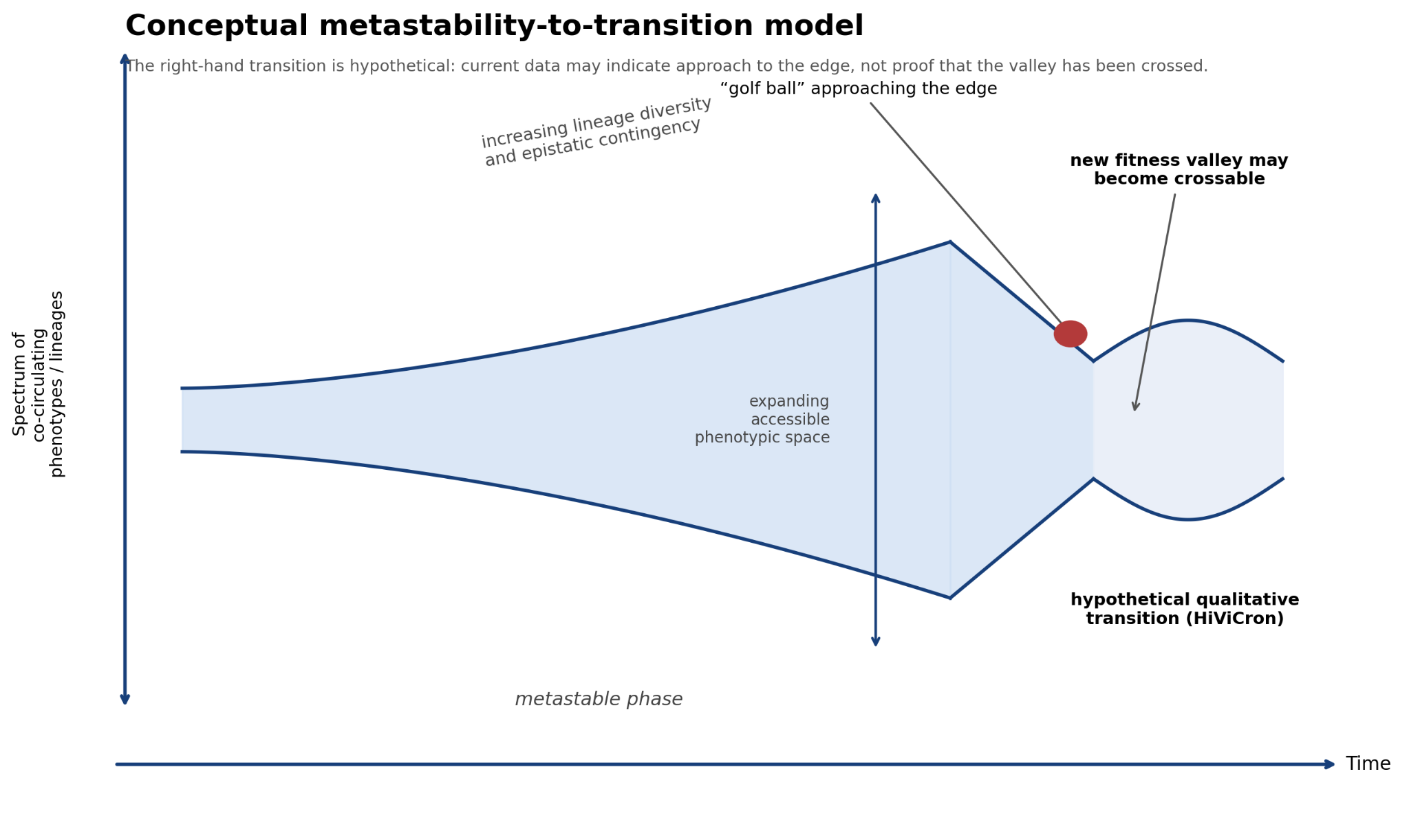
Figure 2. Conceptual metastability model
As epistatically conditioned diversity expands, genetic backgrounds that compensate previously prohibitive fitness costs may open access to a new phenotypic region. The right part of this figure reflects my hypothesis, not a reconstruction of currently measured viral fitness. The narrowing, therefore, should not yet be read as demonstrated global convergence. Rather, it represents the hypothesis that selective pruning may be beginning: within a still-diverse landscape, some newly emerging lineages are acquiring increasingly large growth advantages and may start to dominate over previously co-circulating alternatives
The golf-ball analogy remains useful. I still cannot conclude that the ball has crossed the ridge and started rolling down the other side. Current hospitalization and severity surveillance does not show the clinical phenotype that would allow me to make that claim.
But I am becoming increasingly reluctant to describe what we’re seeing as merely another seasonal oscillation of an evolutionarily settled endemic virus! The population is highly branched. Saltational lineages continue to emerge. Mutations that were previously costly are encountering new genetic backgrounds in which those costs can be compensated. PJ.2.1 may already provide an example of a virus possessing enough receptor-binding fitness to ‘spend’ part of that surplus on further immune escape. Meanwhile, transmission is rising from exceptionally low baselines in some regions, while the clinical signal remains comparatively muted. [5,6]
That is precisely the kind of configuration I would expect near the boundary of a metastable state.
Numerous lineages. Numerous apparently contradictory fitness effects. Saltational variants appearing from old genetic backgrounds. Mutations that mean one thing on one background and something entirely different on another.
That is what metastability may look like immediately before it ceases to be metastable.
Perhaps the golf ball has not yet started rolling down the hill. But I think there is now substantially more reason to ask whether it has reached the edge.
1. Vanden Bossche G. When Selection Changes the Landscape Itself: Epistasis, apparent stability and why SARS-CoV-2 may remain evolutionarily metastable. Voice for Science and Solidarity, Substack. 29 September 2026. https://voiceforscienceandsolidarity.substack.com/p/when-selection-changes-the-landscape
2. Hisner R (@LongDesertTrain). X thread, 21 July 2026 — PJ.2.1 highlighted on the Neher/Roemer BA.2.86 phylogeny; original source used for Figure 1A.

3. Hisner R (@LongDesertTrain). X thread, 1 August 2026 — updated PJ.2.1 phylogeny and the observation: ‘The whole PJ tree is completely unlike what you typically see.’ Source used for Figure 1B.
4. Pöhlmann S (@snpoehlm). X thread on PJ.2.1 and saltational evolution, 10 September 2026 — distinction between stepwise (‘regular’) and saltational evolution, and international spread of PJ.2.1.
5. He P, Li B, Guo C, et al. Increased receptor binding capability of the SARS-CoV-2 saltational variant PJ.2.1. bioRxiv. Posted 8 September 2026. doi:10.64898/2026.09.03.749172. https://www.biorxiv.org/content/10.64898/2026.09.03.749172v1
6. Hisner R. Social-media thread, 20 September 2026 — independent PJ.2.1 descendant with S:A475V and discussion of ACE2-affinity ‘room’ for antibody-evasive substitutions. Archived via Bluesky/Mike Honey tracking. https://www.bluenews.app/bsky/mikehoney.bsky.social?tab=replies
7. World Health Organization. Weekly Epidemiological Record, Issue 28, July 2026 — SARS-CoV-2 continues to circulate without a clear seasonal or evolutionary pattern. https://www.who.int/publications/journals/weekly-epidemiological-record/WER101-28
8. Sciensano. Wastewater surveillance ‒ respiratory viruses, Belgium. Late-September 2026 SARS-CoV-2 classification and comparison with influenza/RSV. https://wastewater.sciensano.be/dashboard/respiratoryviruses/en/
9. European Centre for Disease Prevention and Control (ECDC). Communicable Disease Threats Report, Week 39, 19–25 September 2026 ‒ EU/EEA respiratory-virus surveillance. https://www.ecdc.europa.eu/sites/default/files/documents/communicable-disease-threats-report-week-39-2026.pdf
10. U.S. Centers for Disease Control and Prevention (CDC). Respiratory Illnesses Data Channel, 25 September 2026 ‒ U.S. respiratory-virus activity and COVID-19 hospitalization summary. https://covid.cdc.gov/covid-data-tracker/
11. Eldrid CFS, Allen JD, Newby ML, Crispin M. Suppression of O-Linked Glycosylation of the SARS-CoV-2 Spike by Quaternary Structural Restraints. Analytical Chemistry. 2021;93:14392–14400. doi:10.1021/acs.analchem.1c01772.
12. Liu P, Yue C, Meng B, et al. Spike N354 glycosylation augments SARS-CoV-2 fitness for human adaptation through structural plasticity. National Science Review. 2024;11(7):nwae206. doi:10.1093/nsr/nwae206.
13. World Health Organization. Global Respiratory Virus Activity, Weekly Update No. 597 ‒ Week 38, 2026 global respiratory-virus activity. https://www.who.int/publications/m/item/global-respiratory-virus-activity--weekly-update-n-597
14. World Health Organization. COVID-19 dashboard ‒ global case, hospitalization, variant and surveillance data. https://data.who.int/dashboards/covid19/
15. European Centre for Disease Prevention and Control (ECDC). SARS-CoV-2 variants of concern as of 25 September 2026 ‒ current European variant classification. https://www.ecdc.europa.eu/en/covid-19/variants-concern

Geert Vanden Bossche received his DVM from the University of Ghent, Belgium, and his PhD degree in Virology from the University of Hohenheim, Germany. He held adjunct faculty appointments at universities in Belgium and Germany. After his career in Academia, Geert joined several vaccine companies (GSK Biologicals, Novartis Vaccines, Solvay Biologicals) to serve various roles in vaccine R&D as well as in late vaccine development.
Geert then moved on to join the Bill & Melinda Gates Foundation’s Global Health Discovery team in Seattle (USA) as Senior Program Officer; he then worked with the Global Alliance for Vaccines and Immunization (GAVI) in Geneva as Senior Ebola Program Manager. At GAVI he tracked efforts to develop an Ebola vaccine. He also represented GAVI in fora with other partners, including WHO, to review progress on the fight against Ebola and to build plans for global pandemic preparedness.
Back in 2015, Geert scrutinized and questioned the safety of the Ebola vaccine that was used in ring vaccination trials conducted by WHO in Guinea. His critical scientific analysis and report on the data published by WHO in the Lancet in 2015 was sent to all international health and regulatory authorities involved in the Ebola vaccination program. After working for GAVI, Geert joined the German Center for Infection Research in Cologne as Head of the Vaccine Development Office. He is at present primarily serving as a Biotech / Vaccine consultant while also conducting his own research on Natural Killer cell-based vaccines.
Email: info@voiceforscienceandsolidarity.org
.svg)
